
Rootwork Commons is structured as a neighborhood-scale economy rooted in land stewardship, paid labor, and local circulation.
This page offers a visual explanation of how value moves through the project, and how this differs from more typical charity-based approaches.
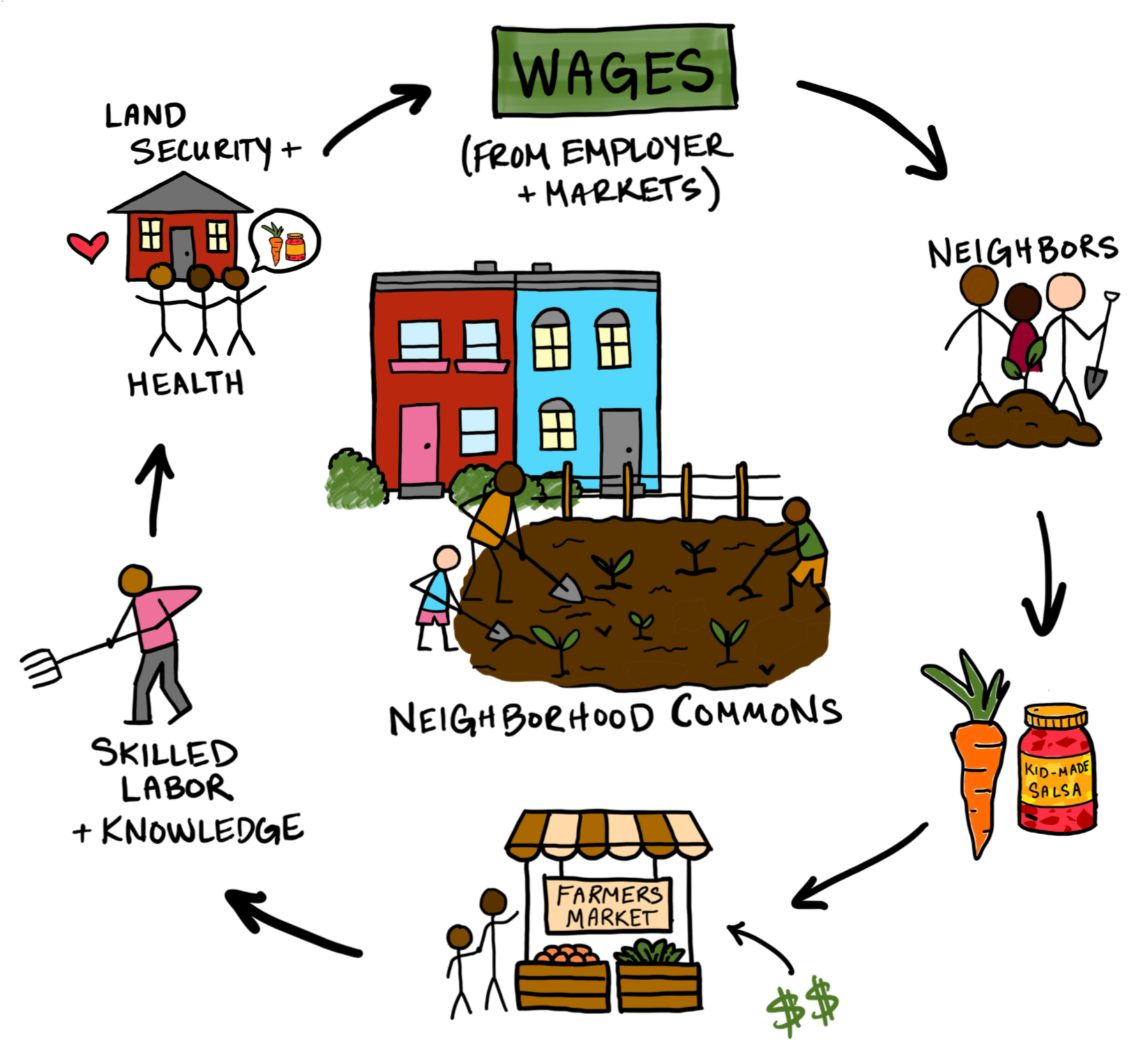
Rootwork Commons’ Economy
In this structure, land stewardship, paid work, and local markets reinforce one another. Value generated through food and value-added goods is reinvested into wages, land care, and long-term capacity, allowing each site to grow more durable over time.
Philanthropic and aligned investment supports this early work by redistributing resources into communities that have historically been denied access to land and capital.
Over time, this structure supports a neighborhood culture of care — where food, work, and land stewardship are part of everyday life rather than externally imposed programs.
How This Differs From Typical Charity Models

Many land-based projects rely on short-term funding cycles and unpaid or underpaid labor. While these efforts often begin with good intentions, they can struggle to sustain land care and worker livelihoods over time.
By embedding revenue and reinvestment into the work itself, Rootwork Commons reduces reliance on continuous grant funding as sites mature.